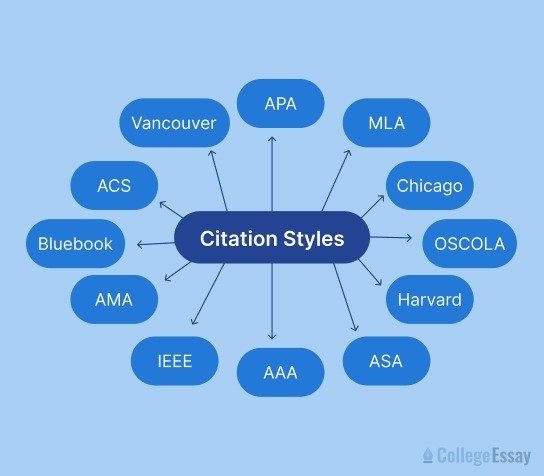
Navigating the world of academic citation can feel like learning a new language. You're trying to present your original ideas, but you also need to meticulously acknowledge every source that shaped your thinking. For many, this journey begins with the Modern Language Association (MLA) style. Far from being a rigid set of arbitrary rules, understanding MLA citation style fundamentals is really about adopting a flexible, logical framework designed to give credit where it's due, establish your credibility, and allow your readers to easily track down your sources.
MLA's 9th edition, in particular, champions adaptability. It recognizes that sources today come in countless forms—from traditional books and journal articles to podcasts, social media posts, and interactive web experiences. Instead of providing an exhaustive rulebook for every conceivable source type, MLA offers a robust, common-sense process based on nine "core elements." Master these, and you'll be able to cite virtually anything with confidence.
At a Glance: Your Quick Guide to MLA Essentials
- Focus: Humanities subjects like literature, language, and art.
- Core Principle: A flexible, process-oriented approach (MLA 9th edition).
- Works Cited: A comprehensive list of all sources at the end of your paper.
- In-text Citations: Brief parenthetical references within your text, linking to your Works Cited.
- The 9 Core Elements: A standardized set of information points to describe any source.
- Punctuation: Primarily uses commas and periods to separate elements.
- Goal: To help readers locate your sources and establish your academic integrity.
Why MLA Matters (and Why It's Simpler Than You Think)
At its heart, citation isn't just about avoiding plagiarism; it's about transparency and intellectual honesty. When you cite a source in MLA style, you’re doing three crucial things:
- Giving Credit: You acknowledge the intellectual property of others, showing respect for their research and ideas.
- Building Credibility: You demonstrate that your work is well-researched and grounded in existing scholarship.
- Guiding Your Reader: You provide a clear roadmap for anyone who wants to explore your sources further, verify your information, or delve deeper into the topic.
The genius of the MLA 9th edition lies in its flexible approach. Gone are the days of memorizing dozens of unique formats for specific source types. Instead, the MLA Handbook emphasizes a "container" concept. Think of it like nesting dolls: an article (the source) might be inside a journal (the container), which might be inside a database (another container). By identifying these containers and their relevant information, you can construct accurate citations for almost any source you encounter. This approach is particularly useful in the humanities, where essays often analyze texts, films, or artistic works that may appear in various formats or platforms.
The Core of MLA 9: The Nine Elements Framework
Every Works Cited entry you create will draw from a possible nine core elements. Not every source will have all nine, but by systematically checking for each one, you ensure your citation is as complete as possible. The key is to present these elements in a specific order, separated by clear punctuation.
Let's break down each element:
1. Author.
- What it is: The person or group primarily responsible for the work.
- How to list: Begin with the author's last name, followed by a comma, then the rest of the name as it appears (first name, middle initial if applicable). End with a period.
- Example: Doe, Jane.
- Variations: If there are two authors, separate them with "and" (Doe, Jane, and John Smith.). For three or more, list the first author followed by "et al." (Doe, Jane, et al.). If no author is listed, skip this element and start with the Title of Source.
2. Title of source.
- What it is: The name of the specific work you are citing.
- How to list: This element's formatting depends on the type of source.
- Italicize: For self-contained works like books, entire periodicals (journals, magazines), albums, films, and websites.
- Example (book): The Great Gatsby.
- Example (website): Purdue OWL.
- Use quotation marks: For works that are part of a larger whole, like articles in journals, chapters in books, poems in anthologies, individual songs on an album, episodes of a TV series, or specific pages/articles on a website.
- Example (journal article): "The Future of Literary Criticism."
- Example (webpage article): "MLA Style Center."
- Punctuation: End with a period, inside the quotation marks if applicable.
3. Title of container,
- What it is: The larger whole that holds the source you're citing. This is the cornerstone of MLA 9th edition's flexibility. A source can have multiple containers.
- How to list: Usually italicized, followed by a comma.
- Examples: A journal article is in a journal. A chapter is in a book. A webpage article is on a website. An episode is in a TV series. A song is on an album. A book might be on Google Books or in JSTOR.
- Multiple Containers: If your source appears in one container which itself is part of a larger container (e.g., a short story in an anthology that's part of a series, or a journal article found in an online database), you'll list the first container, then its information, then the second container and its information.
4. Other contributors,
- What it is: People who contributed to the source but aren't the primary author.
- How to list: Precede their role with terms like "edited by," "translated by," "illustrated by," "adapted by," etc. Follow their name(s) with a comma.
- Example: translated by Lydia Davis,
5. Version,
- What it is: Indicates a specific edition or version of a work.
- How to list: Use terms like "revised ed.," "2nd ed.," "Director's Cut," "unabridged version." Follow with a comma.
- Example: 3rd ed.,
6. Number,
- What it is: Specifies a numbered sequence within a larger work.
- How to list: Commonly for multi-volume books (Vol. 2,) or scholarly journals (Vol. 45, no. 2,). Also for episodes of a series (ep. 5,). Follow with a comma.
- Example: Vol. 3,
7. Publisher,
- What it is: The organization or entity that makes the source available.
- How to list: List the publisher's name, followed by a comma. If there are multiple publishers, separate them with a forward slash (/).
- Exceptions (do NOT include publisher's name for):
- Periodicals (journals, magazines, newspapers).
- Works published by their author or editor.
- Websites with the same title as their publisher.
- Websites that host works but don't publish them (e.g., YouTube, WordPress, JSTOR, Google Books, Netflix).
- Example: Penguin Random House,
8. Publication date,
- What it is: The date the source was published or made available.
- How to list: Provide the full date (Day Month Year) if available and relevant, otherwise just the year. For online sources that change frequently, prioritizing the most relevant or original date is crucial. Follow with a comma.
- Example: 15 Apr. 2023,
9. Location.
- What it is: Where the reader can find the specific part of the source you're referencing.
- How to list:
- Page numbers: For print articles, essays, or chapters in books (pp. 25-30. or p. 12.).
- URLs: For online works (remove "http://" or "https://").
- DOIs (Digital Object Identifiers): Preferred for scholarly articles, especially if a URL might change.
- Physical location: For unique, firsthand objects or artworks (e.g., Museum of Modern Art, New York.).
- Punctuation: Always ends with a period.
- Example (page numbers): pp. 10-15.
- Example (URL): www.mla.org/MLA-Style/MLA-Handbook/What-s-New-in-the-Ninth-Edition.
- Example (DOI): doi:10.1353/pmc.2023.0012.
Remember: Only commas and periods separate these elements in MLA 9th edition. Punctuation is determined by the element itself. A period marks the end of an element or the entire entry.
Putting It Together: Crafting a Works Cited Entry
Let's see how these elements combine to form common citations. The goal is always clarity and consistency, allowing your reader to easily locate your source.
Example 1: A Book by a Single Author
Let's cite The Art of the Novel by Milan Kundera.
- 1. Author: Kundera, Milan.
- 2. Title of source: The Art of the Novel.
- 7. Publisher: Grove Press,
- 8. Publication date: 1988.
Works Cited Entry:
Kundera, Milan. The Art of the Novel. Grove Press, 1988.
Example 2: A Scholarly Journal Article from an Online Database (with DOI)
Let's cite an article titled "Climate Change and the Human Condition" by Dr. Alice Green from Environmental Studies Journal, Volume 25, Issue 3, published in 2023, found via JSTOR with a DOI. - 1. Author: Green, Alice.
- 2. Title of source: "Climate Change and the Human Condition."
- 3. Title of container: Environmental Studies Journal,
- 6. Number: Vol. 25, no. 3,
- 8. Publication date: 2023,
- 9. Location: doi:10.xxxx/esj.2023.001.
Works Cited Entry:
Green, Alice. "Climate Change and the Human Condition." Environmental Studies Journal, Vol. 25, no. 3, 2023, doi:10.xxxx/esj.2023.001.
Example 3: An Article from a Website
Let's cite an article titled "The Power of Storytelling" by John Writer on the website "Literary Hub," published October 12, 2022. - 1. Author: Writer, John.
- 2. Title of source: "The Power of Storytelling."
- 3. Title of container: Literary Hub,
- 8. Publication date: 12 Oct. 2022,
- 9. Location: www.literaryhub.com/the-power-of-storytelling.
Works Cited Entry:
Writer, John. "The Power of Storytelling." Literary Hub, 12 Oct. 2022, www.literaryhub.com/the-power-of-storytelling.
Example 4: A Song from a Music Album on a Streaming Service
Let's cite the song "Imagine" by John Lennon, from the album Imagine, released in 1971, found on Spotify. - 1. Author: Lennon, John.
- 2. Title of source: "Imagine."
- 3. Title of container (album): Imagine,
- 7. Publisher: Apple,
- 8. Publication date: 1971.
- 3. Title of container (streaming service): Spotify,
- 9. Location (URL optional, but good for specific platforms): www.spotify.com/album/imagine.
Works Cited Entry:
Lennon, John. "Imagine." Imagine, Apple, 1971. Spotify, www.spotify.com/album/imagine.
(Note: MLA 9 often allows omitting the publisher for music, or the platform if it's common knowledge. The key is what information helps locate the specific version you used.)
Optional Elements: When to Add Extra Detail
While the nine core elements cover most situations, sometimes adding a bit more context can be helpful. These optional elements are included at your discretion, typically if they enhance clarity or the ability to locate the source.
- Date of original publication: If a source has been republished multiple times, providing both the original and the version you used can be useful for historical context. Place the original date before the publisher.
- City of publication: Usually omitted in MLA 9. Only necessary in specific, rare instances, like works published before 1900, where the city name might be essential for identifying the publisher.
- Date of access: Recommended for online sources, especially those that are frequently updated or moved. Place it at the very end of the entry (e.g., Accessed 15 Mar. 2024.).
- URLs: While generally included for online sources, instructors or editors may occasionally prefer them omitted if the source is easily found via a search engine. Always remove "http://" or "https://".
- DOIs (Digital Object Identifiers): These are stable, unique alphanumeric strings that identify content and provide a persistent link to its location on the internet. For journal articles, a DOI is always preferred over a URL if available, as it guarantees locatability even if the URL changes.
Seamless Integration: Understanding In-Text Citations
Works Cited entries are the full story, but in-text citations are your brief, polite nudges within your essay, telling readers exactly where to look in your Works Cited list for more information. MLA 8th edition style for in-text citations is retained in the 9th edition, keeping things familiar.
The primary goal is to provide enough information to direct your reader to the correct entry without interrupting the flow of your writing.
The Basic Format: (Author's Last Name Page Number)
- When you quote, paraphrase, or summarize an idea, place the author’s last name and the page number(s) in parentheses at the end of the sentence, before the final punctuation.
- Example: Romantic poetry is characterized by the "spontaneous overflow of powerful feelings" (Wordsworth 263).
Author Named in the Sentence: - If you introduce the author's name in your sentence, you only need to provide the page number(s) in the parenthetical citation.
- Example: Wordsworth states that romantic poetry is characterized by the "spontaneous overflow of powerful feelings" (263).
For Works with No Author: - If a source in your Works Cited list has no author, use a shortened version of the title in your in-text citation.
- Example (full title: "Anonymity in the Digital Age"): Concerns about privacy have increased ("Anonymity" 12).
For Media with Runtime (Audio/Video): - For films, podcasts, or recordings, include the relevant range of hours, minutes, and seconds.
- Example: The protagonist reflects on his childhood (Lynch 00:02:15-00:02:35).
Placement: - Always place the parenthetical citation immediately after the quoted or paraphrased material, but before the final punctuation of the sentence. If you're citing an entire paragraph, place the citation at the end of the last sentence.
Common Questions & Troubleshooting Your MLA Citations
Even with a flexible framework, questions pop up. Here are some common scenarios and how to handle them:
- What if there's no author? Skip the author element and begin your Works Cited entry with the Title of Source. For in-text citations, use a shortened version of the title.
- What if there's no publication date? If no date is available, you can use "n.d." (for "no date") in the date element, or simply omit the element. Prioritize finding the most relevant date if possible.
- How do I cite images or videos? Treat them like any other source, applying the nine core elements. The creator would be the "Author," the image's title would be the "Title of source," and the website or book where you found it would be the "Container."
- When do I not need to cite? You do not need to cite common knowledge (facts that are widely known and accepted), or your own original ideas and analysis. If you're unsure, it's always better to cite.
Mastering MLA citation takes practice, but the core elements approach of the 9th edition makes it far more intuitive. If you're ever feeling stuck or need a quick check, remember that tools are available to help you streamline the process. You can always turn to our free MLA citation generator to help you quickly format your entries, saving you time and ensuring accuracy.
Your Next Steps to Citation Confidence
Understanding MLA citation style fundamentals isn't about rote memorization; it's about developing a systematic way to document your sources responsibly and effectively. By internalizing the nine core elements and the concept of "containers," you gain a powerful tool that will serve you across various academic disciplines in the humanities.
Don't let citation be a last-minute chore. Approach it as an integral part of your research process, and you'll find that it not only adds polish to your work but also deepens your understanding of how knowledge is built and shared. Keep the MLA Handbook as your trusted companion, practice applying the core elements, and soon you'll be citing with clarity and confidence.